The Stations of the Cross at
St Faith's
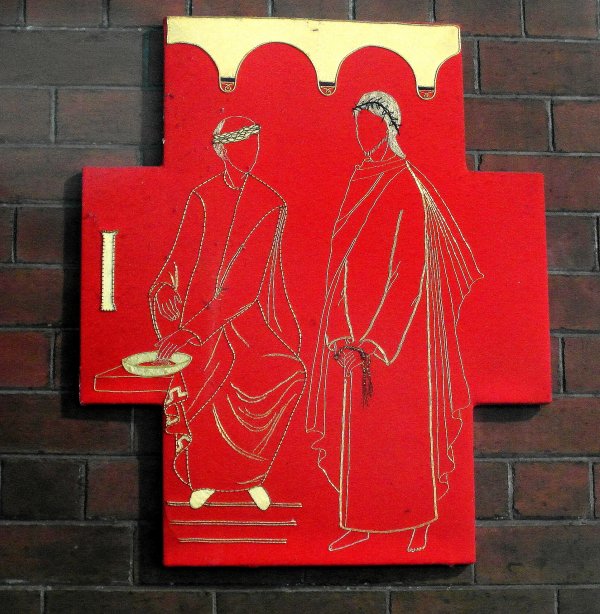
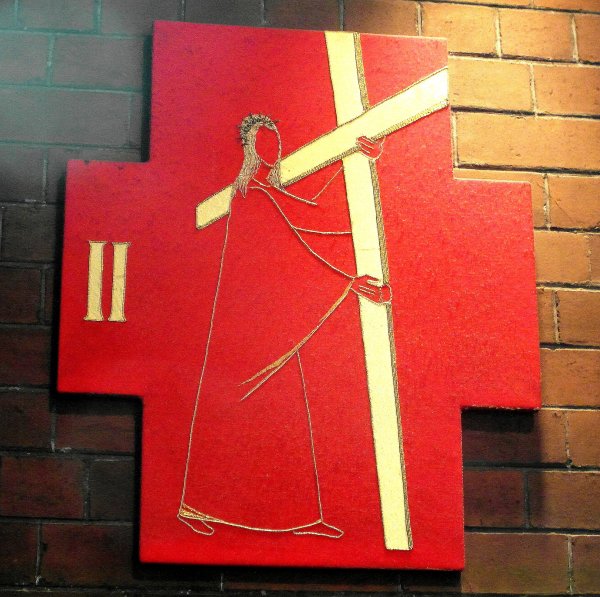
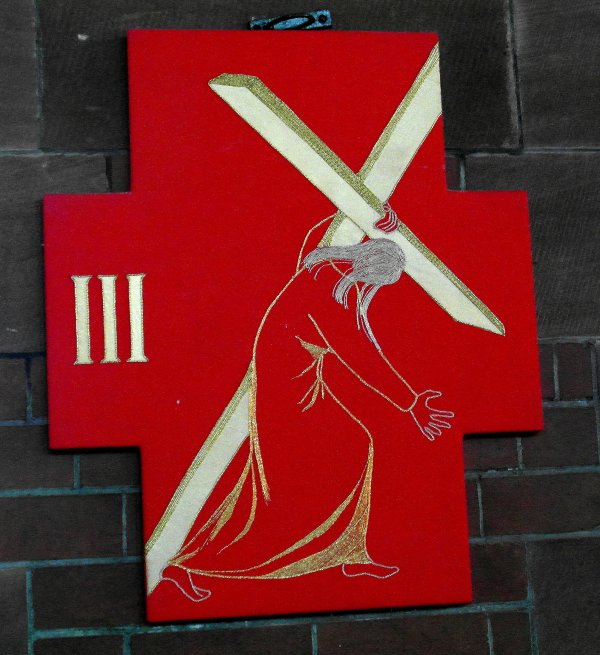
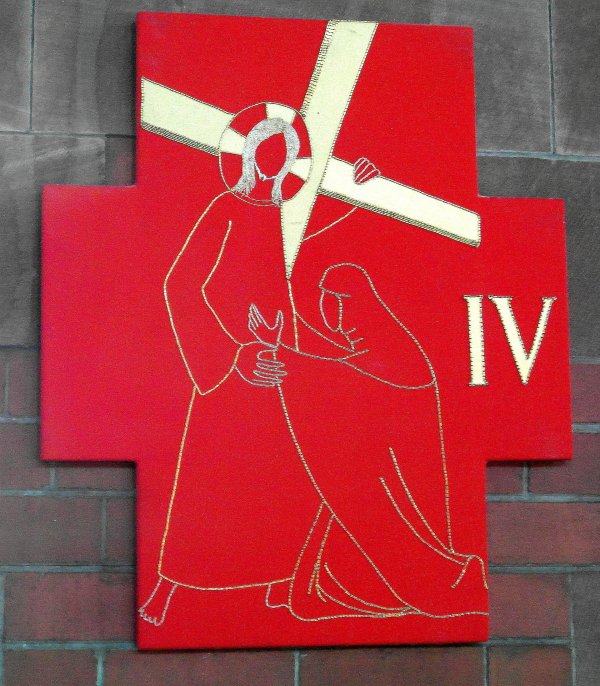
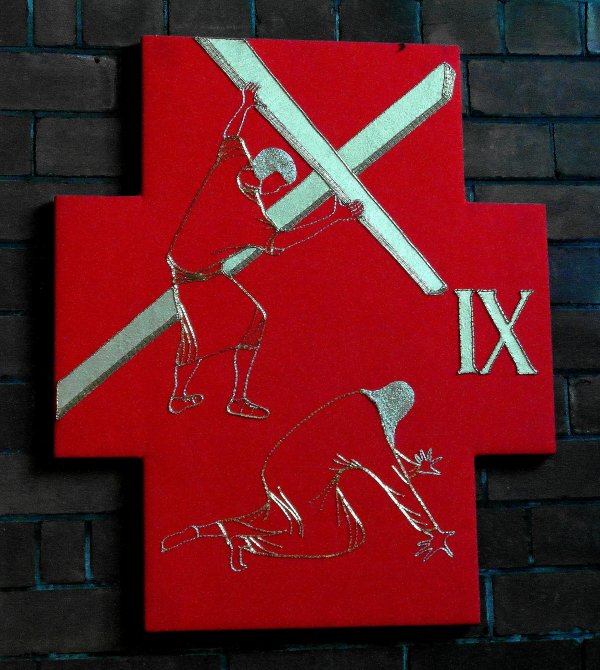
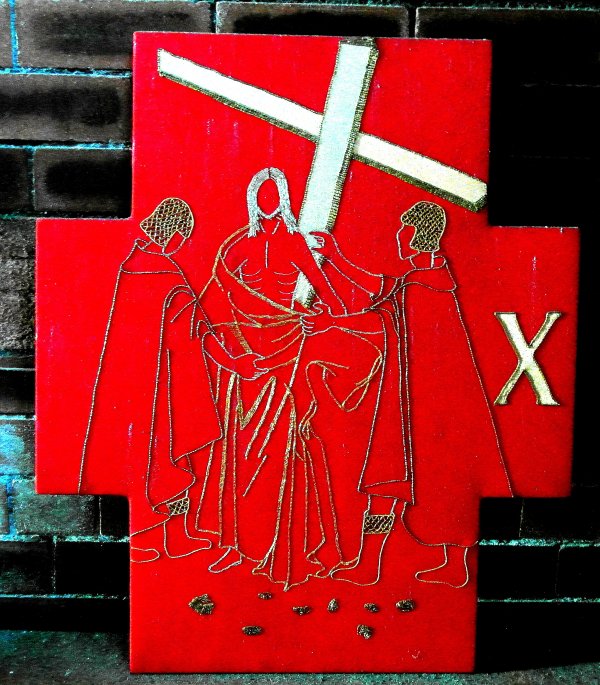
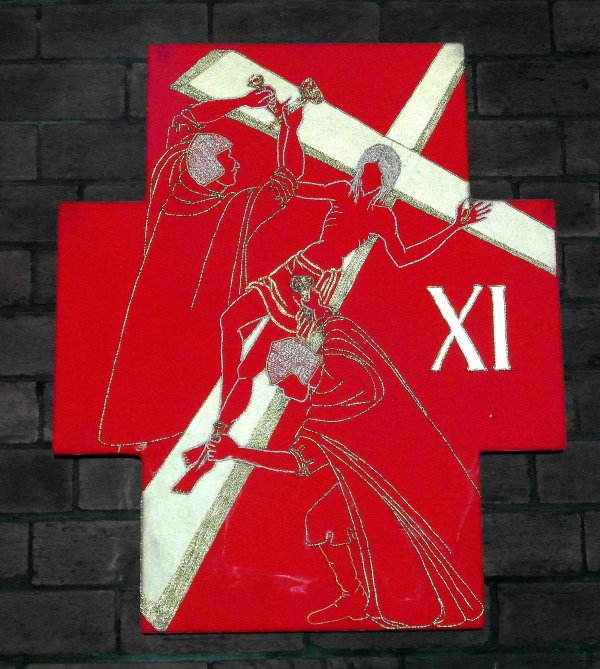
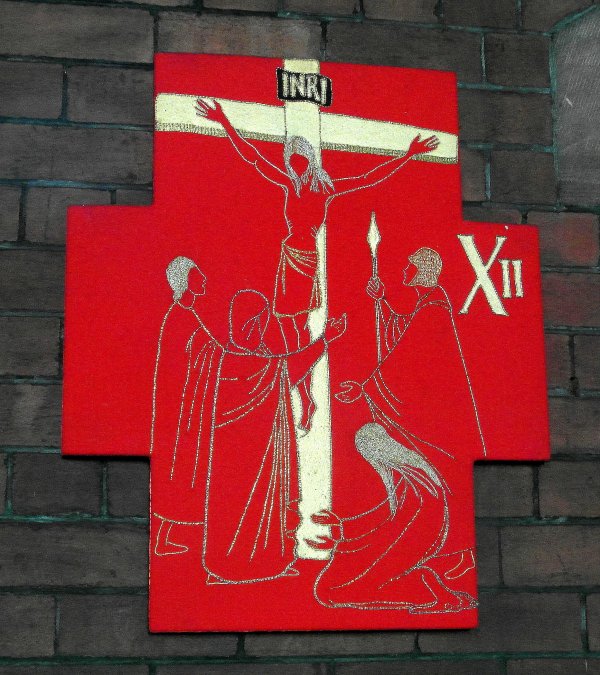
The fourteen embroidered Stations of the Cross, are
displayed during Lent at different locations on walls and pillars
around St Faith's. They begin with two hangings on the wall of the
Lady Chapel, then down the south wall nave pillars, and back
up the north nave pillars, to end with the final panels on the
walls of the Chapel of the Cross. From Easter to the beginning of
Lent, they are grouped in the Chapel of the Cross. They are the
work of members of our congregation, working to the design of
Sister Anthony of the Metropolitan Cathedral, who is also
responsible for another fine piece of embroidery displayed in the
Church, the new banner of Saint Faith.
The stations are a focus of worship during Lent and Passiontide.
Follow this link for the
illustrated text of one of the settings previously used during
this season.
The history of the Stations of
the Cross
(also known as the Way of the Cross, the Via Crucis and the Via
Dolorosa).
The history of the Stations of the Cross is somewhat confused as
is the actual number, although this has now settled on fourteen.
The object of the Stations is to help people make, in spirit, a
pilgrimage to the main scenes of Christ's sufferings and death.
Although chapels, intended to represent the important shrines in
Jerusalem, were constructed as early as the 5th century there is
no evidence that they were intended in any way to follow any Way
of the Cross. The reports of pilgrims of the 14th century mention
a sacred route around the shrines but they do not identify any Via
Crucis as it is now understood. The earliest mention of Stations
of the Cross occurs in the narrative of the English pilgrim,
William Wey, who visited Jerusalem in 1458 and again in 1462; he
mentions that it was usual for pilgrims to follow in the footsteps
of Christ but from Calvary to the house of Pilate. By the 16th
century the accepted route had been reversed to that we know
today.
During the 15th century a number of pilgrims returning to their
homes took steps to establish a set of the Stations by painted or
carved scenes located in monasteries and convents. Stations were
constructed in the Dominican friary at Cordova, the Poor Clare
convent in Messina and in Nuremburg. Shortly afterwards others
imitated these Stations and sites were located at Fribourg,
Louvain and Rhodes. Over the years many more imitative sites were
constructed but there appears to have been no agreement on the
number of Stations. Wey, in his 15th century account, mentions 14
sites in Jerusalem but only 5 correspond with current Stations and
7 are only remotely connected with the Way of the Cross accepted
today. These were, the house of Dives, the city gate through which
Christ passed, the probatic pool, the Ecce Homo arch, the Blessed
Virgin's school and the houses of Herod and Simon the Pharisee.
During the 16th century manuals of devotion produced for
those visiting Jerusalem variously mention 19, 25 and 37 stations.
A book (Jerusalem sicut Christi tempore floruit) published
in 1584, mentions 12 Stations and these correspond to the first 12
of the modern Stations. After Jerusalem came under Turkish control
pilgrimages to the Holy places were more difficult and the
devotional ritual practised at the imitative Stations in places
throughout Europe became established; it is reasonable to presume
that the current practice follows European ritual, rather than
that which was practised by pilgrims in Jerusalem during the 15th
and 16th centuries.
Medieval accounts of pilgrimages make no mention of the
second Station (Christ receiving the cross) or the tenth (Christ
being stripped of His garments); one Station mentioned in almost
all early accounts but not in the present Stations is the Ecce
Homo arch. One of the earliest imitative Stations indicates that
Christ had nine Falls, but only three are currently included: the
3rd, 7th and 9th; an explanation for the other four is that they
correspond with four other incidents, His meeting with His Mother,
Simon of Cyrene, His face wiped by Veronica and His meeting with
the women of Jerusalem. The fact that nothing of note happened at
the location of the other three falls means that they are
retained. There is also confusion as to the timing of certain
events: some have placed Simon of Cyrene and the women of
Jerusalem at the same time whilst the Veronica incident, is
considered by some to have occurred just before Christ's arrival
at Calvary.
The Stations of the Cross in St Faith's provide a powerful
and moving focus for devotion in Lent and Passiontide. Their
complex evolution is perhaps of little significance: it is the
message which is important.
No
1
Christ is condemned to die
|
|
|
No 2
The cross is laid on Christ
|
 |
|
No 3
Christ`s first fall
|
|
|
No 4
Christ meets His Blessed Mother
|
|
|
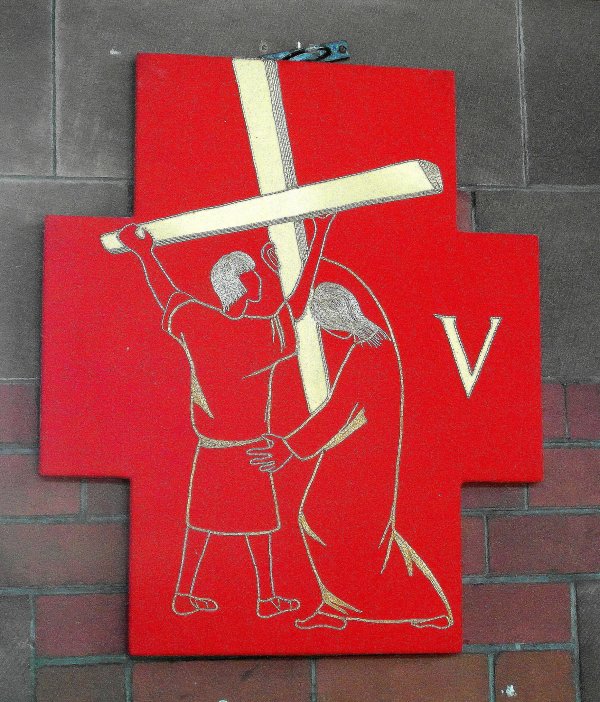
No 5
Simon of Cyrene is made to bear the
cross
|
|
|
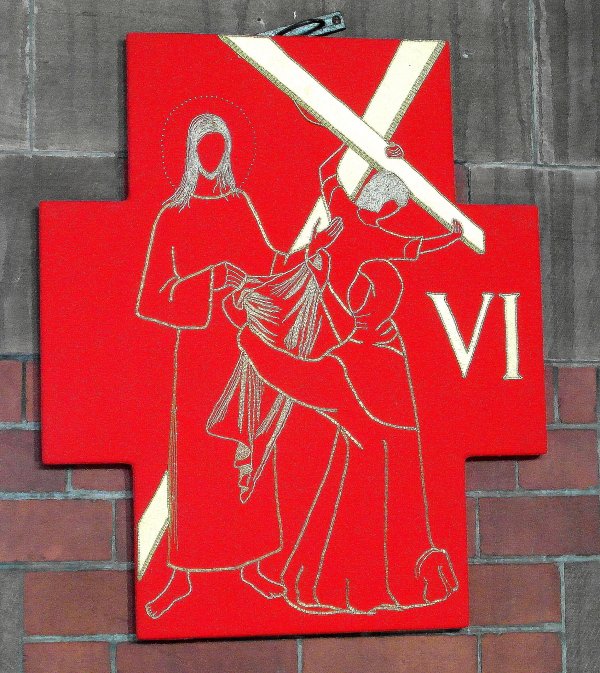
No 6
Christ`s face is wiped by Veronica
|
|
|
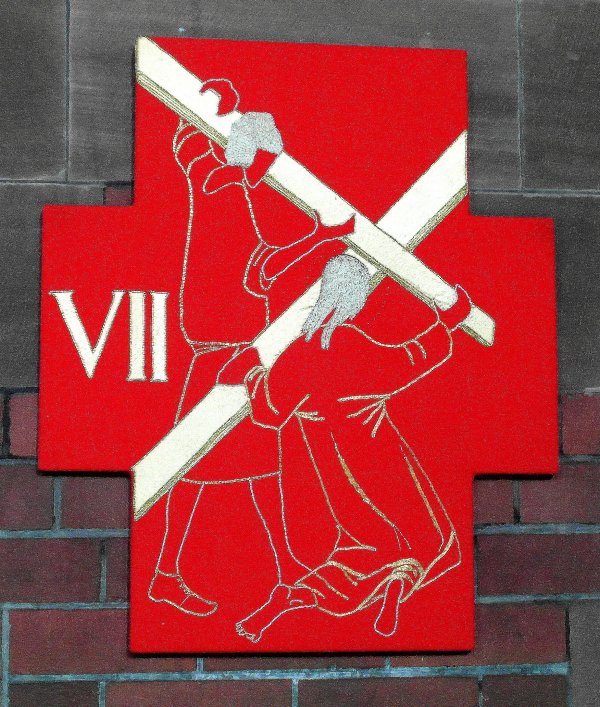
No 7
Christ`s Second Fall
|
|
|
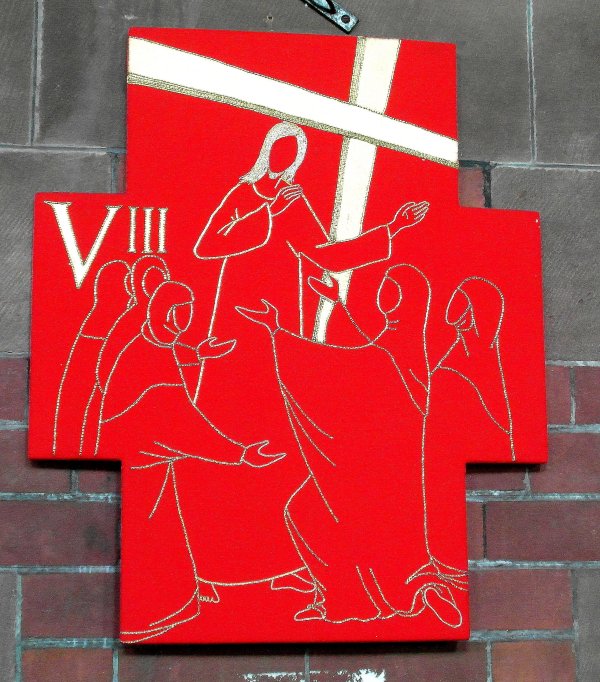
No 8
Christ meets the Women of Jerusalem
|
|
|
No 9
Christ`s Third Fall
|
|
|
No 10
Christ is stripped of His Garments
|
|
|
No 11
Christ`s crucifixion
|
|
|
No 12
Christ`s death on the cross
|
|
|
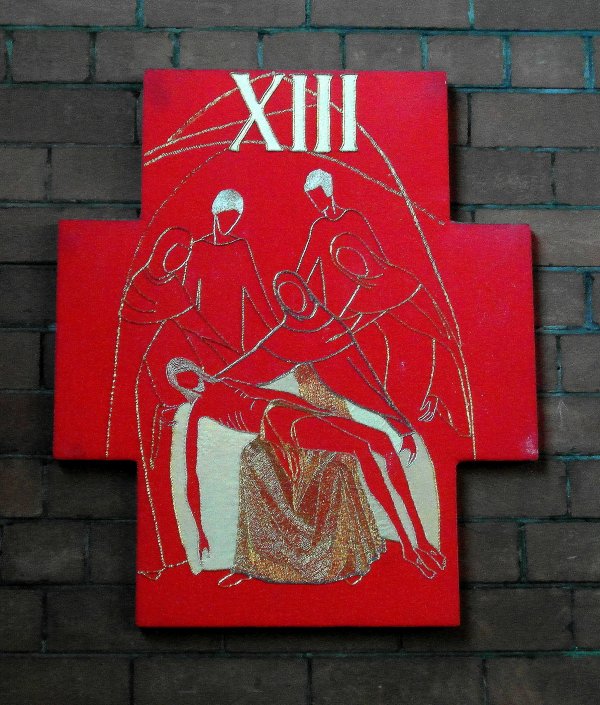
No 13
Christ`s body is taken down from
the cross
|
|
|
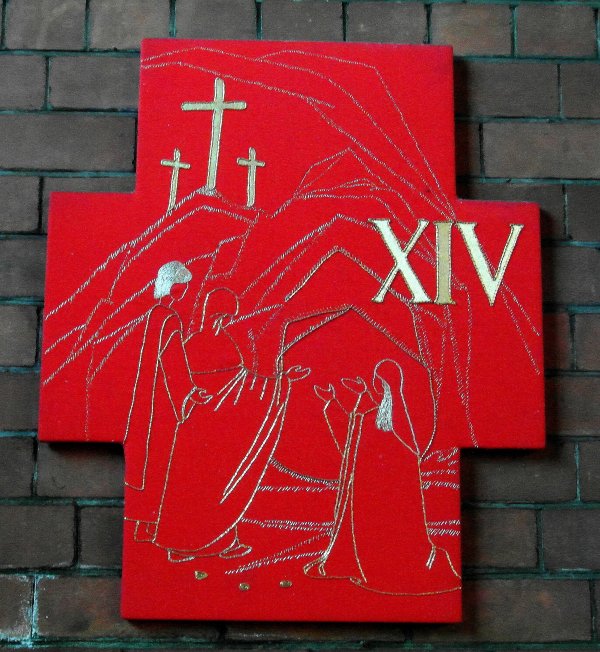
No 14
Christ is laid in the tomb
.
|
|
|
Click here for Everyman's
Way of the Cross (Holy Week 2007 and 2008)
Go to Saint
Faith`s home page